
Home / Blog / Why is my auto repair shop missing calls?
Calls
Why is my auto repair shop missing calls?
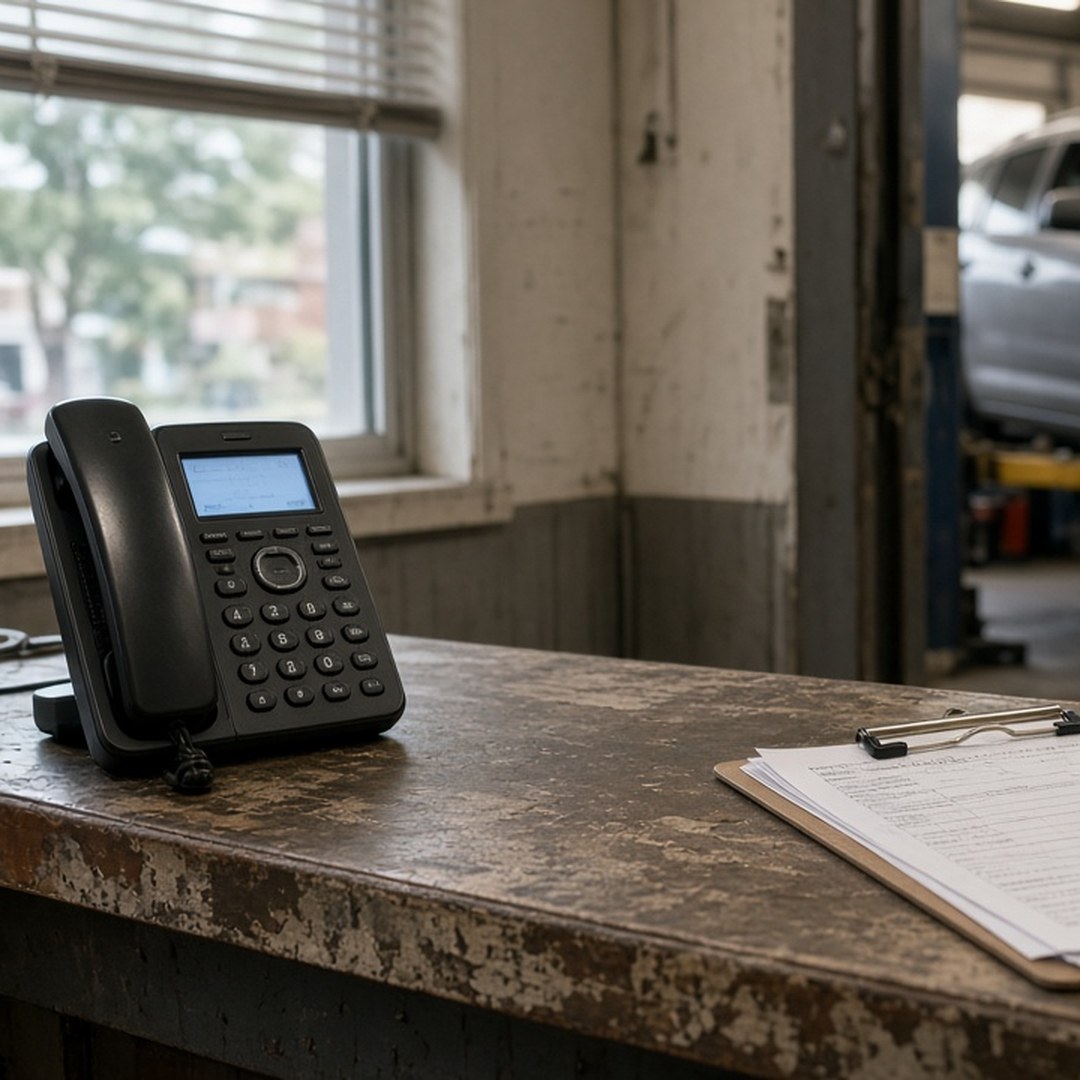
An auto repair shop usually misses calls at the same few times every day: the morning drop-off rush, lunch, the first and last hour, and any time the one person who answers is out in the bays. A long phone tree or a full voicemail box loses the rest. Look at when the misses happen before paying for more rings, because more calls into the same gap become more missed calls.
Key takeaways
- Missed calls bunch up at the same hours, so find the pattern first.
- The counter rush and lunch are the usual gaps, not the slow afternoon.
- A long phone tree or a full voicemail box sends drivers to the next shop.
- Return every missed call fast, because the driver is still calling around.
- Fix the gap before buying more calls, or the new calls go unanswered too.
Missed calls bunch up at the same few hours
Most auto repair shops miss calls at the same few times every day, not at random. The phone rings hardest when the counter is busiest, and the counter is busiest at drop-off, at pickup, and right after lunch. A shop that feels like it answers every call usually means the slow afternoon, when the phone is quiet anyway.
The way to see it is the call log. Pull a week or two from the phone system and sort the missed calls by hour. If the misses land between opening and mid-morning, the drop-off line is the problem. If they land late in the day, it is pickup. A shop that only guesses at this tends to fix the wrong hour.
The counter is busy when the phone rings
The person at the counter usually misses calls because they are already helping someone in front of them. A customer dropping off keys, a customer paying an invoice, and a tech asking about an approval all come before a ringing phone. That is the right call in the moment, but the driver on the line does not know that. They hear ringing and try the next shop.
The fix is a plan for who answers when the counter is full. That might be a second person who picks up after a set number of rings, a phone in the office that rings at the same time, or a rule that the counter answers and asks the caller to hold for a moment. Say the plan out loud to the whole crew, so nobody assumes someone else has it.
Lunch, opening, and closing leave nobody on the phone
The first hour, lunch, and the last hour are when a small shop most often has nobody free to answer. At opening, the service writer is checking in cars. At lunch, the one person who answers steps out. In the last hour, the counter is handing back keys and the techs are wrapping up jobs.
Look at the call log for those windows specifically. If a single person covers the phone, stagger lunch so someone is always near it, or forward calls to a cell phone that a second person carries. If the shop closes at a set time, the voicemail greeting and the Google listing hours should match that time exactly, so drivers are not calling a shop the listing says is open.
A long phone tree or a full voicemail box loses drivers
A long phone menu or a voicemail box that is full sends drivers to another shop. A driver whose car is making a noise wants a person who can say when it can come in. Press one for service, two for parts, and three for hours is three chances to hang up. A full mailbox is worse, because the driver cannot even leave a message.
Call the shop from a cell phone, start to finish, at a busy hour. Count how long it takes to reach a person, and listen to what a stranger hears. Keep any menu to one or two choices, put the person first, and clear the voicemail every day. The greeting should be short and say when someone will call back.
Missed calls need a fast call back
Every missed call should get a call back as soon as someone is free, whether or not the driver left a message. A driver calling around is usually deciding in the next hour, not the next day. A call back while they are still choosing can win the job. A call back the next morning usually reaches someone whose car is already at another shop.
Make one person responsible for the missed call list at set times of day, such as before lunch and before close. If the phone system can send a text to missed callers saying someone will call right back, that can hold a driver for a few minutes. It does not replace the call. The article on how to get more calls for an auto repair shop covers what happens once a person picks up.
Fix the gap before buying more calls
A shop that misses calls should fix when the phone gets answered before it pays for more rings. More ads and a busier listing send more calls into the same busy hours, and the shop pays for calls nobody picked up. If the shop tracks cost per call, count only the calls a person answered, so the number shows the real cost.
When ads spend and the phone still feels quiet, the cause may be the ads and not the phone. The guide to why Google Ads are not getting calls walks through the ad schedule, call counting, and the landing page. Run the ad schedule only during the hours someone can answer. We do not guarantee a call count, a ranking, or a revenue number.
What to check this week
- Pull one to two weeks of the call log and sort the missed calls by hour.
- Name who answers when the counter is full, and tell the whole crew.
- Stagger lunch or forward the phone so someone always covers it.
- Call the shop from a cell phone and time how long it takes to reach a person.
- Clear the voicemail box and shorten the greeting.
- Call back every missed number before lunch and before close.
Questions people ask
Why is my auto repair shop missing so many calls?
Most missed calls happen when the person who answers is busy with something else. That is usually the morning drop-off line, the pickup rush late in the day, lunch, or a stretch when the service writer is out in the bays talking to a tech. Pull the call log from the phone system and sort the missed calls by hour. The pattern tends to show up within a week or two, and it points at a staffing or routing fix rather than a marketing one.
How do I see which calls my shop missed?
Start with the phone system itself. Most business phone services and carriers show a call log with the time, the caller's number, and whether anyone picked up. If the shop uses call tracking for ads or the Google listing, that report shows missed calls by source too. Look at a full week, including Saturday if the shop is open. Write down the hour of each miss. A simple tally by hour is enough to see where the gaps are.
Do drivers leave a voicemail when nobody answers?
Many do not. A driver with a check engine light or a car that will not start is usually calling a few shops in a row, and the one that picks up gets the job. A voicemail is a request to wait, and that driver often has a second shop to call. Keep the voicemail box empty so it can take messages, keep the greeting short, and call every missed number back as soon as you can, whether or not they left a message.
Should my auto repair shop use a phone tree?
Keep it short or skip it. A driver calling a repair shop usually wants one thing: a person who can say when the car can come in. Every menu option is another chance to hang up. If the shop needs routing, keep it to one or two choices and make the first one reach a person. Test it yourself from a cell phone, start to finish, and time how long it takes to reach someone.
Should I hire an answering service for missed calls?
It can help with after-hours calls and overflow, but check what it can actually do. A service that only takes a name and number is a voicemail with a person attached. One that can book a drop-off time or answer basic questions does more. Either way, someone at the shop still needs to call those drivers back first thing. Try it on the hours where the call log shows the most misses, not on the whole day.
Will more advertising fix missed calls?
No. More ads send more calls into the same gaps, so the shop pays for rings nobody answers. Fix when and how the phone gets picked up first, then look at whether the shop needs more calls at all. A shop that answers more of the calls it already gets often finds the bays fuller without spending more. We do not guarantee a call count, a ranking, or a revenue number from any of this.

Isaac Donnelson
Isaac Donnelson runs Auto Shop Marketers for auto repair shops. He is the growth partner on the account. He writes about calls, the Google listing, and what a shop actually pays for ads.