
Home / Blog / How should an auto repair shop respond to a bad review?
Listings
How should an auto repair shop respond to a bad review?
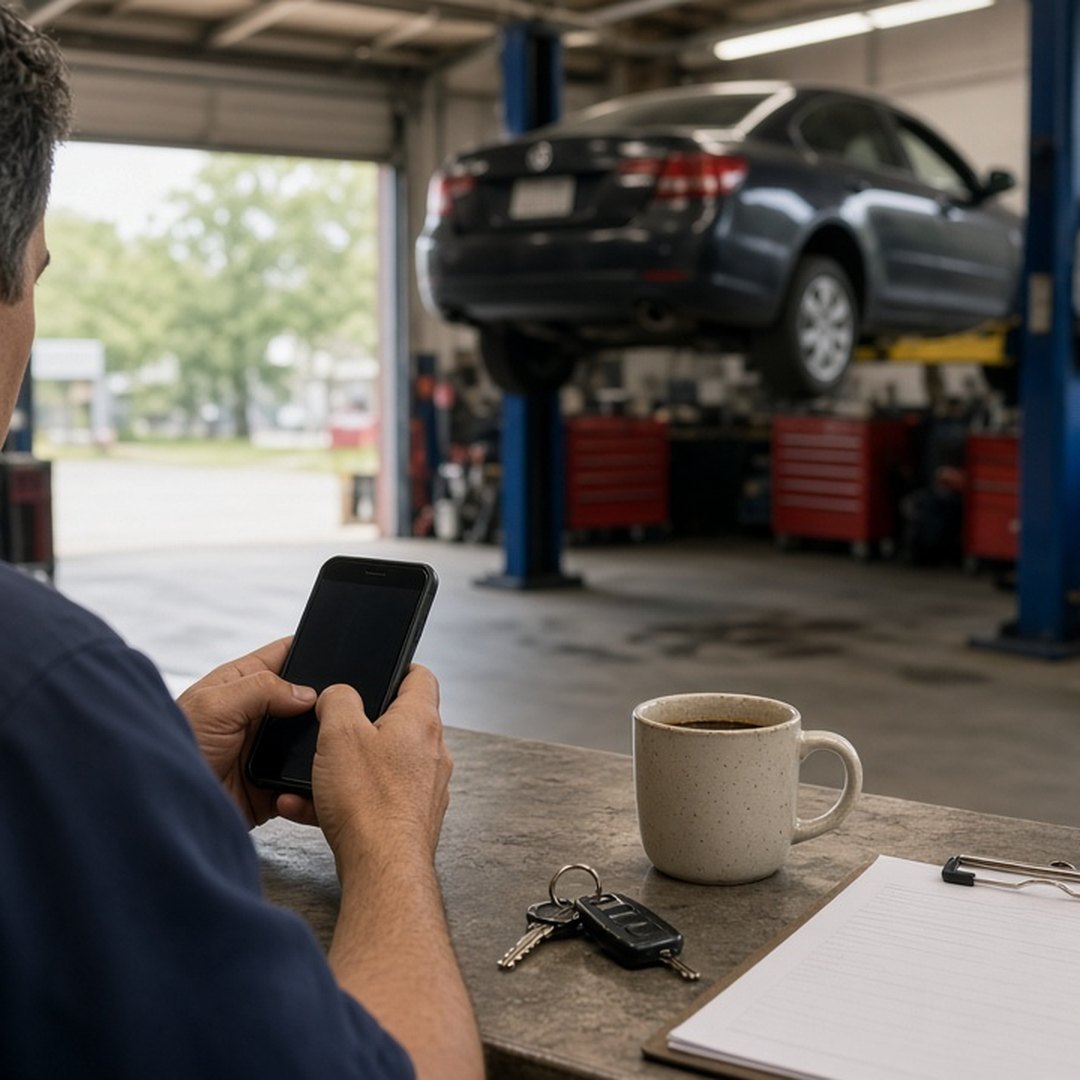
An auto repair shop should answer a bad review within a few days, calmly, and in plain words. Thank the customer, say what you understand happened, and offer one direct way to talk it through off the page. Do not argue the details or share anything about the invoice or the car. The reply is written for the next driver, who is deciding whether to call.
Key takeaways
- The reply is read by the next driver more than by the reviewer.
- Check the repair order and the tech's side before you answer.
- Answer within a few days, in plain words, without arguing.
- Move the details to a phone call, and keep invoices private.
- Report a review only when it breaks Google's policy, not because it stings.
Who is the reply actually for?
The reply to a bad review is written for the next driver, not just the person who left it. The upset customer may never read it. The person comparing three shops on Google Maps tonight will, and they are deciding whether to tap Call.
That changes what a good reply sounds like. It does not need to win the argument. It needs to show that a real person read the complaint, took it seriously, and offered a fair way to sort it out. A driver who sees that will often trust the shop more than one with no complaints and no replies.
What should you do before you write anything?
Before you write anything, read the review twice and pull the repair order. Find out who handled the job and ask them what happened, what was found, and what the customer was told. Many bad reviews come from a gap between what was said at the counter and what the customer heard.
Then wait until you can write calmly. A reply typed between cars while you are still angry tends to argue, and arguing in public is the one thing that makes a bad review worse. If the review names a tech or a service writer, talk to them before you reply so the answer is fair to them too.
How should the reply read?
A good reply is short, plain, and signed by a person who can make a decision. Thank the customer for the feedback, say in one sentence what you understand went wrong, and offer one direct way to talk it through: a first name and the shop phone. Three or four sentences is usually enough.
For example, a review says the car came back with the same noise after a brake job. A fair reply says you are sorry the noise came back, that you want to look at it again, and that the customer can ask for the manager by name at the shop number. It does not explain rotors, defend the tech, or mention what the customer declined last visit.
Write it the way you would talk to the customer at the counter. Skip legal language and copy-pasted apologies. A driver can tell when the same template sits under every complaint.
What should you never put in a public reply?
Never put the invoice, the price, the mileage, or any detail about the car the customer did not share first. Do not post what work they declined, what they said on the phone, or anything that reads like you are building a case against them. Even when the record backs you up, it tells the next driver the shop will use their details in public.
Also leave out blame, sarcasm, and a line by line rebuttal. If the customer got a fact wrong, you can say gently that you see it a little differently and would like to go over the record together on the phone. That is enough. The full story belongs in a conversation, not on the listing.
When should you report a review instead of answering it?
Report a review only when it breaks Google's content policy, such as spam, a review from someone who was never a customer, a competitor, or hateful language. You can flag it from the Business Profile, and Google decides whether it comes down. A review that is harsh, unfair, or wrong about the facts usually stays.
It is fine to report a review and reply to it at the same time. The reply covers you while Google looks at it. Do not offer a refund, a discount, or a free service in exchange for taking a review down. Trading something for a review change is the same problem as paying for a good one.
What happens after the reply?
After the reply, the real work is at the shop. If the review is right about something, like long waits for a callback or a car returned dirty, fix the habit that caused it. The same complaint showing up again is a bigger signal to the next driver than any one review.
If you and the customer sort it out, post a short follow-up reply saying the shop took another look and made it right. Some customers update their review on their own. Do not ask them to as a condition of the fix. Then keep asking every customer for a review at pickup, the same way, so one bad review sits among many recent real ones. The guide to getting more Google reviews for an auto repair shop covers the ask and the link, and what goes on an auto repair shop Google Business Profile covers the listing those reviews sit on.
What to do with the next bad review
- Read the review twice and wait until you can answer calmly.
- Pull the repair order and talk to the tech before you write a word.
- Reply in public within a few days, in plain words, under the owner or manager's name.
- Say what you understand happened without arguing the customer's account line by line.
- Offer one direct way to talk it through off the review, with a name and the shop phone.
- Keep the invoice, the car, and the customer's private details out of the reply.
- Fix what the review got right at the shop, then answer again if it gets resolved.
How an auto repair shop should respond to a bad review
- Read the review twice and wait until you can answer calmly.
- Pull the repair order and talk to the tech before you write a word.
- Reply in public within a few days, in plain words, under the owner or manager's name.
- Say what you understand happened without arguing the customer's account line by line.
- Offer one direct way to talk it through off the review, with a name and the shop phone.
- Keep the invoice, the car, and the customer's private details out of the reply.
- Fix what the review got right at the shop, then answer again if it gets resolved.
Questions people ask
How fast should an auto repair shop reply to a bad review?
Reply within a few days, once you have checked the repair order and talked to whoever did the work. A same-hour reply written while you are angry usually reads worse than a calm one written the next morning. Waiting weeks has its own cost, because every driver who reads the review in the meantime sees no answer at all. Put review replies on someone's weekly list so they do not depend on the owner finding a spare moment between cars.
Should the owner or the service writer reply to bad reviews?
The owner or a manager should reply, and sign with a first name and a role. A reply from a real person who can make a decision tells the next driver the problem reached someone who can fix it. The service writer who handled the job is useful for the facts, so talk to them first. Keep one voice across replies so the profile does not read like three people arguing with customers.
Can I get a bad review removed from Google?
Only when it breaks Google's content policy, for example spam, a review from someone who was never a customer, hate speech, or a conflict of interest such as a competitor. You can report it from the Business Profile, and Google decides. A review that is unfair, harsh, or wrong about the facts is usually not removed for that reason. Answer it in public instead. A calm reply under an unfair review often helps the shop more than a removal would.
Should I mention the invoice or what the customer declined?
No. Do not post the invoice, the price, the mileage, the work they declined, or anything else about the car that the customer did not share first. Even when the record proves your side, putting it in public makes the shop look like it will use a customer's details against them. Say you have the record, and that you would like to go over it with them on the phone. The next driver only needs to see that you offered.
What if the review is about a comeback or a repeat repair?
Treat it as a real problem first. Pull both repair orders, ask the tech what was found each time, and decide what the shop will do before you reply. In public, say you are sorry the car came back, that you want to look at it again, and give a name and the shop phone. Do not explain the diagnosis in the reply. If the shop makes it right, a short follow-up reply saying so shows the next driver how it ended.
Do bad reviews hurt my shop on Google Maps?
A few bad reviews among many real ones are normal for a busy shop, and most drivers expect them. What hurts is a run of recent complaints about the same thing with no replies, because it tells a driver the problem is ongoing and nobody is listening. Keep asking every customer for a review, reply to all of them, and fix what keeps coming up. We do not guarantee a ranking, a call count, or a revenue number.

Isaac Donnelson
Isaac Donnelson runs Auto Shop Marketers for auto repair shops. He is the growth partner on the account. He writes about calls, the Google listing, and what a shop actually pays for ads.