
Home / Blog / Should an auto repair shop send Google Ads to the homepage?
Ads
Should an auto repair shop send Google Ads to the homepage?
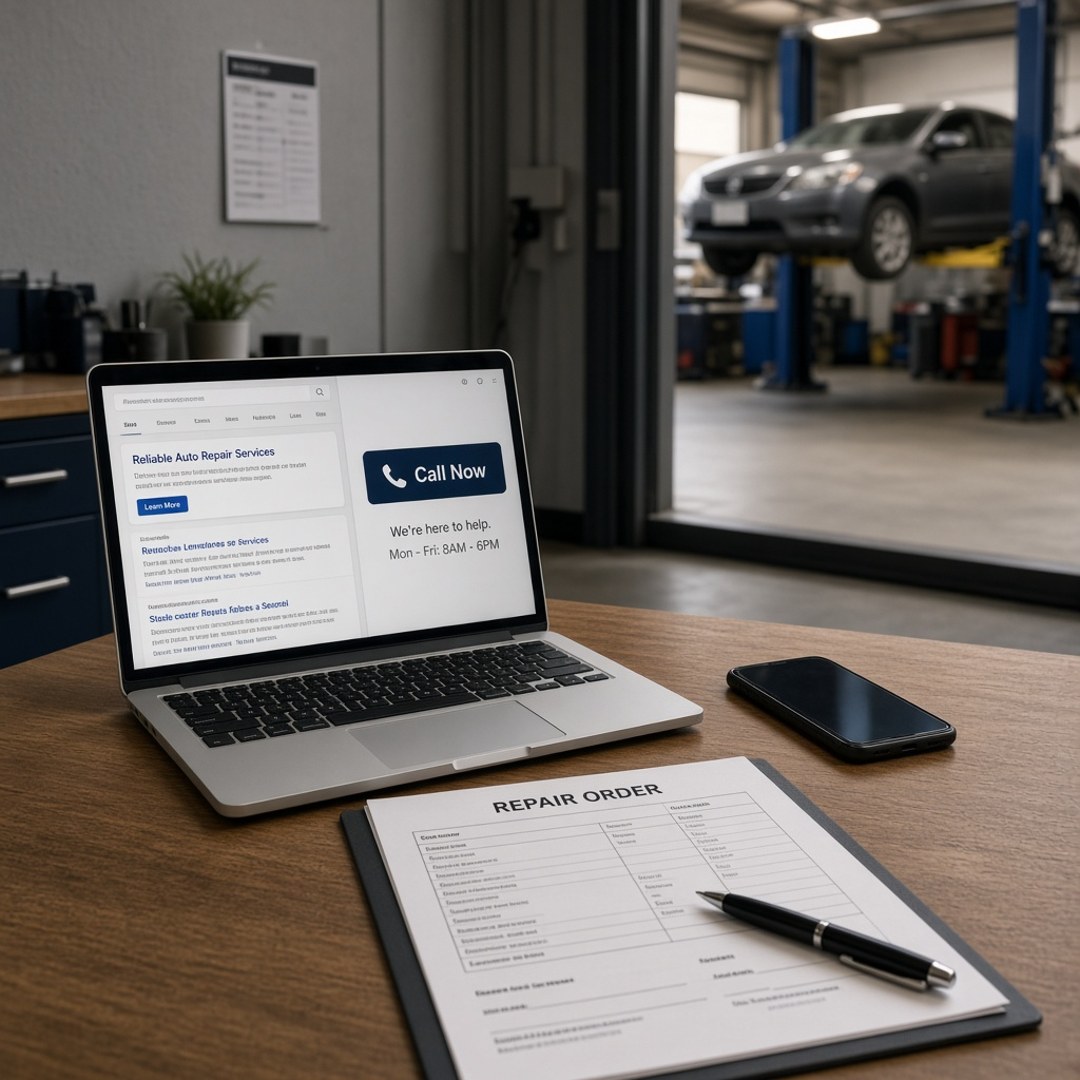
Usually not. An auto repair shop should send Google Ads clicks to a page that matches the search and asks for the call, not to the homepage. The homepage has to speak to every visitor at once, so the service the driver searched for, the phone number, and the reason to call get buried. A focused page keeps the promise the ad made and makes calling the obvious next step.
Key takeaways
- Send paid clicks to a page that matches the search, not the homepage.
- The first screen should repeat the service from the ad and show the phone number.
- The homepage can work for brand searches on the shop's own name.
- One focused page per main service is enough to start.
- Judge the page by answered calls and booked jobs, not clicks.
Usually, send ads to a page that matches the search
An auto repair shop should usually send Google Ads clicks to a page that matches the search, not to the homepage. A paid click comes from a driver who typed one specific thing, like brake repair near me. The page they land on should answer that one thing right away and make calling the shop the easy next step.
Every paid click costs money whether the driver calls or not. The page is where that money either turns into a ringing phone or quietly leaks away. A focused page keeps the promise the ad made. The homepage almost never can, because it was built for a different job.
The homepage has to talk to everyone at once
The homepage tries to serve every visitor, so it rarely serves the driver from the ad well. It has to introduce the shop, list services, welcome back regulars, maybe mention jobs, and point to reviews and directions. That is the right job for a homepage. It is the wrong first screen for someone who just searched for a check engine light diagnosis.
When that driver lands on a general welcome and a wide menu, they have to hunt for the answer. Some will scroll and find it. Many will hit back and tap the next result. The ad did its work, and the page let the click go.
A landing page keeps the promise the ad made
A landing page works because it repeats what the driver searched for and asks for the call. The headline names the service from the ad. The phone number sits on the first screen. A short line of proof, like real reviews or the area the shop serves, shows the business is real and nearby.
What the page leaves out matters as much. No long menu, no blog links, no list of every service the shop has ever done. The guide on what should be on a Google Ads landing page walks through each piece. The point here is simpler: one search, one page, one clear next step.
When the homepage is fine for ads
The homepage is fine when the search is for the shop itself. Someone who types the shop's name already knows who they want. Sending a brand campaign to the homepage meets that expectation, and the homepage is usually the best page for it.
A homepage can also work for a short time if it already leads with the main service and a tap to call number on the first screen. Treat that as a stopgap while a proper page gets built, not the long term plan. If ads point to the homepage today, watch how many clicks turn into answered calls. That ratio tells you how much the page is costing.
One page per main service is enough to start
Most shops only need a small set of ad pages, one for each main group of services they advertise. Brakes, diagnostics, and general repair are common groups. You do not need a page for every keyword.
Group the ads by the service they promise, then send each group to the page that matches. The keyword guide covers how to pick those groups. Add a new page only when one service gets enough clicks that a closer match would clearly help. Keeping the set small also keeps the phone number, hours, and offers consistent across pages.
Judge the page by calls, not clicks
Judge the page the ads point to by answered calls and booked jobs, not by clicks or time on site. Clicks tell you the ad worked. Calls tell you the page worked. Booked jobs tell you the whole path worked.
If clicks are steady and the phone is quiet, look at the page before you raise the budget or change keywords. The article on why Google Ads are not getting calls lists the other common causes, so you can rule them out in order. A tracking number on the page shows which calls came from ads, so the comparison is fair. We do not guarantee a call count, a ranking, or a revenue number.
Questions people ask
Should an auto repair shop send Google Ads to the homepage?
Usually not. Paid clicks come from a driver who searched for one thing, like brake repair or a check engine light. The homepage is built for everyone, so it greets that driver with the whole shop instead of the answer they wanted. Send the click to a page about that service with the phone number on the first screen. Keep the homepage for people who search the shop by name or arrive from the Google listing.
Is it ever fine to send ads to the homepage?
Yes, in a few cases. When someone searches the shop's own name, the homepage is the page they expect, so a brand campaign can point there. A very simple homepage that already leads with one service and the phone number can also work while a landing page is being built. Treat it as a stopgap and watch calls closely. If clicks come in and the phone stays quiet, the page is the first thing to fix.
What is the difference between a homepage and a landing page?
A homepage introduces the whole shop to anyone who arrives, from past customers to job seekers. A landing page has one job, turning a specific search into a call. It repeats the service from the ad, shows the phone number right away, gives a little proof the shop is real, and leaves out menus and links that pull people away. Same shop, same brand, but a much narrower message on the landing page.
How many landing pages does a repair shop need for Google Ads?
Start with one page for each main group of services you advertise, such as brakes, diagnostics, or general repair. You do not need a page for every keyword. Group ads by the service they promise and send each group to the page that matches. Add a new page only when a service gets enough clicks that a better match would make a real difference to calls.
Will sending ads to a landing page hurt my website SEO?
No. A landing page for ads does not take anything away from the rest of the site. Many shops keep ad pages out of the main menu so regular visitors still use the normal site. The organic pages and the Google Business Profile keep doing their job. What matters for the ad page is that it loads fast, matches the search, and makes calling easy.
How do I know if my homepage is costing me calls from ads?
Compare clicks to answered calls and booked jobs from the ads. If clicks are steady and calls are thin, look at what a driver sees first on the page the ad sends them to. If the service they searched for and the phone number are not on that first screen, the page is a likely cause. Call tracking makes this easier, because it shows which calls came from the ads.

Isaac Donnelson
Isaac Donnelson runs Auto Shop Marketers for auto repair shops. He is the growth partner on the account. He writes about calls, the Google listing, and what a shop actually pays for ads.