
Home / Blog / Should an auto repair shop use an answering service?
Calls
Should an auto repair shop use an answering service?
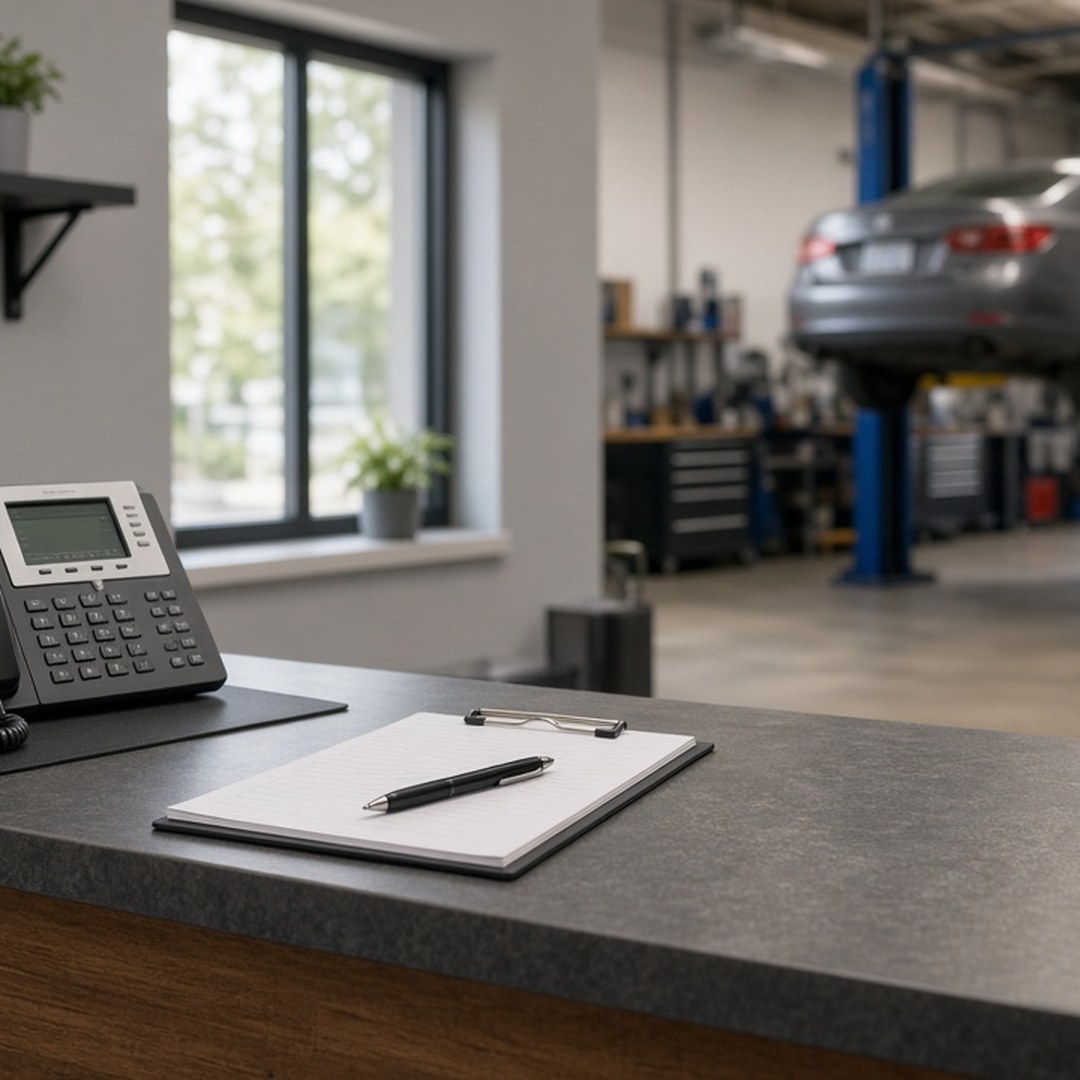
An auto repair shop should use an answering service when its own call log shows calls going unanswered at the counter rush or after closing, and the shop can call those drivers back quickly. A service that only takes a name and number is a voicemail with a person attached. One that can answer basic questions and hold a drop-off time does more. Either way, the service covers gaps. It does not replace the person at the counter.
Key takeaways
- Check the call log first, so you know which hours actually need cover.
- Use a service for overflow and after hours, not as the main line.
- Ask what it can do on a call, not just whether it picks up.
- Give it short, written answers for the questions drivers ask most.
- Someone at the shop still owns every call back.
An answering service is for the gaps, not the main line
An answering service works best when it covers the hours the shop already misses, not when it replaces the person at the counter. The service advisor knows the bays, the techs, and what can fit in tomorrow. A service outside the building does not. Its job is to catch the calls that would otherwise ring out or hit a voicemail box.
That means the first question is not which service to buy. It is which calls are going unanswered today. A shop that misses calls at the drop-off rush has a different gap than a shop whose phone rings at seven at night. The article on why an auto repair shop misses calls walks through how to find those hours in the call log.
The call log tells you whether you need one
Pull one or two weeks of calls from the phone system and mark every call nobody picked up. Sort them by hour and by day. If the misses cluster at opening, lunch, or the last hour, the shop has an overflow gap during open hours. If they cluster in the evening, early morning, or on the day the shop is closed, it has an after-hours gap.
If the log shows only a few misses a week and the shop already calls them back the same day, a service may not be worth the setup. A shorter voicemail greeting and a fixed call back time can cover it. If the log shows the same hours missed over and over, a service aimed at those hours is a reasonable fix.
Message taking and booking are different jobs
A basic answering service takes a message, and a better one can move the driver toward a drop-off time. Both answer in the shop's name. The difference is what the driver hears before they hang up. With a message, the driver hears that someone will call back. With booking, the driver hears when to bring the car in.
Booking only works if the shop sets the rules. Write down which jobs can be booked without a tech looking at the car first, such as a tire swap, a brake inspection, or an oil change, and which ones always need a call back from the counter. Give the service a short list of open slots, or access to the schedule if the shop management system allows it. Without that, a booking service is a message service that sounds more confident.
Human operators and AI answering each have limits
A human operator and an AI answerer both handle routine calls, and both struggle when the call needs someone who knows the shop. A shared call center may be answering for many businesses at once, so the operator is reading from a script. An AI answerer can pick up any hour and follow instructions closely, but it only knows what the shop told it.
Neither one should diagnose a car or quote a repair price that the shop has not approved. Neither one should promise a same-day fix. Pick the option that answers your most common calls clearly, then test it. Call it yourself from a cell phone with the questions drivers actually ask: do you work on my car, when can I bring it in, and what happens next.
Set it up with short answers and a call back rule
The service is only as good as the instructions the shop gives it. Write short answers to the questions drivers ask most: the shop's hours, the kinds of work the bays do and do not do, how drop-off works, and what the first step is on a check engine light or a noise. Keep the hours identical to the Google listing and the website, so drivers hear the same thing everywhere.
Then set a call back rule. Every message from the service lands with one named person at the shop, and that person returns the calls at fixed times, such as first thing in the morning and right after lunch. A driver who called at night is often still deciding at opening. A call back then can win the job. A call back at noon often reaches someone whose car is already at another shop.
Measure what the service catches
Count what the service answered, what the shop returned, and what turned into a booked drop-off. A weekly tally is enough. If the shop uses call tracking, those calls should appear in the same report as the calls the counter answered, so the shop sees the full picture.
If the service answers plenty of calls but few become appointments, look at the hand off, not the service. The same habits that turn a counter call into a booking apply here: start with the car and the symptom, offer two real times, and take a name and number every time. The guide on turning phone calls into appointments covers those steps. We do not guarantee a call count, a ranking, or a revenue number.
Questions people ask
Should an auto repair shop use an answering service?
It makes sense when the shop's own call log shows calls going unanswered at predictable times, such as the morning drop-off rush, lunch, or the evening after closing, and the shop has a person who can return those calls quickly. If the shop already answers almost every call during open hours and gets few calls after closing, a short voicemail greeting and a same-morning call back routine may be enough. Look at the misses before you pay for anything.
What is the difference between a message-taking service and one that can book?
A message-taking service answers in the shop's name, writes down the caller's name, number, car, and problem, and passes it along. The driver still has to wait for a call back. A service that can book works from the shop's schedule or a set of open slots and can tell the driver when to bring the car in. Booking does more for the driver, but it needs clear rules from the shop about which jobs can be booked without a tech.
Is an AI answering service a good fit for a repair shop?
It can be, for routine calls. An AI phone answerer can take the car, the symptom, and a callback number at any hour, and some can offer open times. It should not guess at a diagnosis or quote a repair it has not been told about. Test it from your own cell phone as a driver would, with a few real questions, before you turn it on. If it sounds confused on your test calls, it will sound confused to drivers.
Will drivers hang up on an answering service?
Some will, but fewer than hang up on a ringing phone or a full voicemail box. What matters is that the call is answered in the shop's name, the driver hears a clear next step, and the shop follows through. A driver who is told someone will call back in the morning and then gets that call is usually fine with it. A driver who never hears back will not call again.
Should the answering service take every call or only overflow?
Overflow and after hours is usually the better start. During open hours, the phone should ring the shop first so a person who knows the bays can answer. The service picks up only when nobody at the shop does after a set number of rings, and after closing. That keeps the best calls with the people who can book them and still catches the calls that would have gone to voicemail.
How do I know if the answering service is working?
Compare the calls the service handled against the jobs that came from them. Each week, look at how many calls it answered, how many the shop returned, and how many turned into a booked drop-off. If the shop uses call tracking, those calls should show up there too. We do not guarantee a call count, a ranking, or a revenue number from any of this. The point is to stop losing drivers who already called.
Isaac Donnelson
Isaac Donnelson runs Auto Shop Marketers for auto repair shops. He is the growth partner on the account. He writes about calls, the Google listing, and what a shop actually pays for ads.