
Home / Blog / Should an auto repair shop give price quotes over the phone?
Calls
Should an auto repair shop give price quotes over the phone?
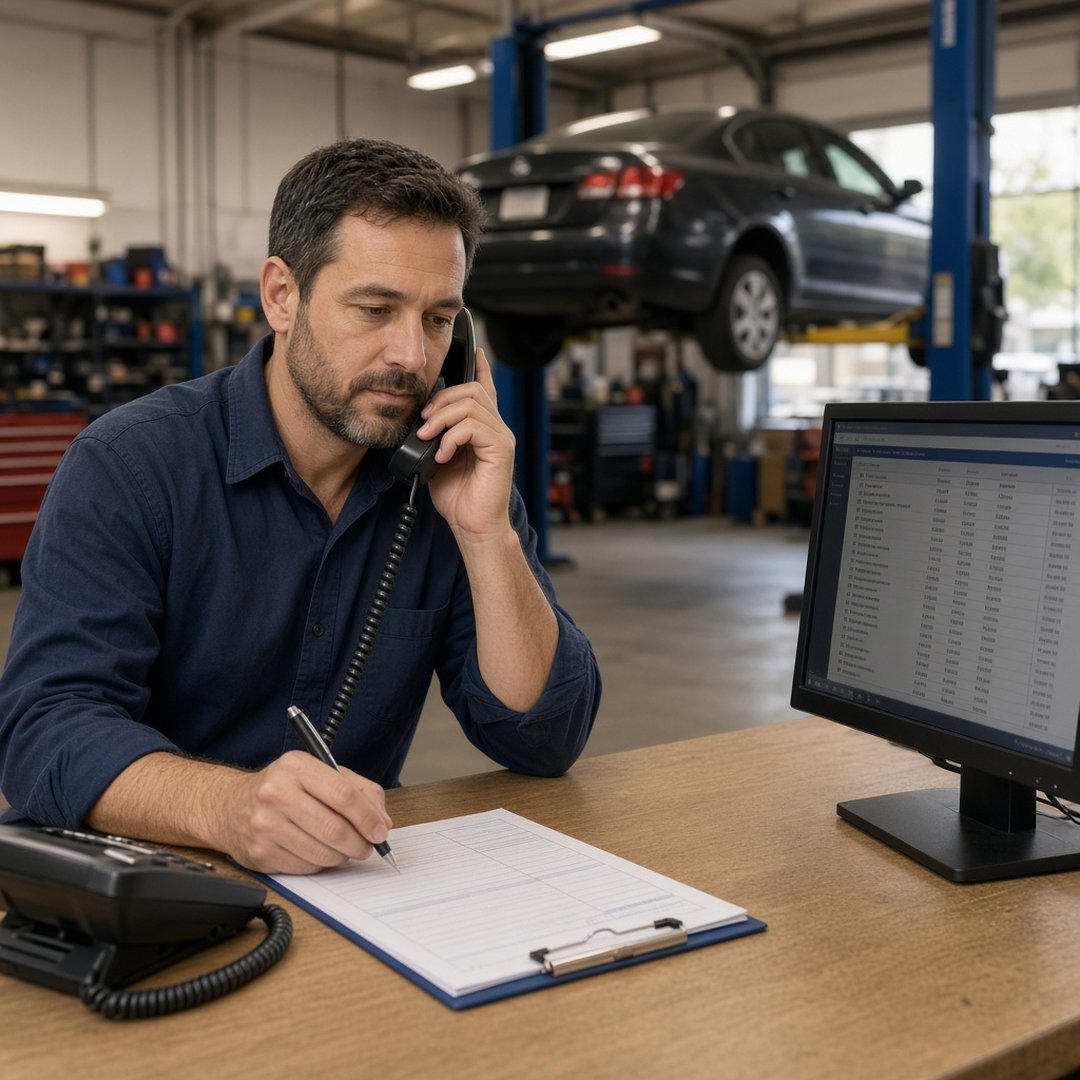
An auto repair shop should give price information over the phone, but not a guessed final price. For known, routine jobs, give an honest range. For problems nobody has seen yet, give the cost of the first step, such as the inspection or diagnosis, and offer a time to bring the car in. That answers the caller's real question without promising a number the car may not support.
Key takeaways
- Never refuse to talk about price. Callers hang up and call the next shop.
- Give a range for routine jobs where the work is predictable.
- For unknown problems, quote the first step, not the whole repair.
- Always end a price question by offering a drop-off time.
- Write down every range you give so the counter stays consistent.
Give price information, not a guess
An auto repair shop should talk about price on the phone, because almost every caller asks and a refusal sounds like hiding. The goal is to give useful price information without guessing a final number for a car nobody has seen.
That means two kinds of answers. For routine, predictable work, give an honest range. For problems that need a look, give the cost of the first step and explain that a full estimate comes before any work. Both answers respect the caller's question and keep the shop out of a number it may not be able to hold.
Refusing to talk about price loses the call
Saying "we can't quote that over the phone" and stopping there usually loses the caller. They have a car problem, they want some idea of what they are getting into, and the next shop on the list is one tap away.
Callers do not expect a mechanic to diagnose a noise from a description. They do expect a straight answer about what happens next and what it costs to start. A shop that gives that answer sounds confident. A shop that dodges sounds like it plans to surprise them later.
Ranges work for known jobs
Routine work can be quoted as a range because the shop does it the same way over and over. Maintenance and common, well understood jobs fall here. A range covers the normal differences between vehicles and parts without the shop having to look up every detail while the caller waits.
Keep the ranges on a short written sheet the owner approves, and update it when parts or labor change. Then everyone who answers the phone says the same thing. Two advisors giving two different numbers for the same job is one of the fastest ways to lose a caller's trust.
Unknown problems get a first step, not a total
When the problem is unknown, quote the first step instead of the repair. A noise, a warning light, or a car that runs rough could be many things. Any total named on the phone is a guess, and if the real repair costs more, the customer feels baited even though the shop was only trying to help.
Explain the first step plainly: the shop will inspect or diagnose the car, here is what that step costs, and nobody touches anything else until the customer approves an estimate. That is a clear, honest price for what the shop can actually promise today.
Every price answer should end with a time
A price question is really a booking question. The caller is deciding whether to bring the car in. So every price answer should end with an offer of two real drop-off times, such as tomorrow morning or Thursday after lunch.
Before talking money at all, ask about the car and the problem. It shows the caller the shop is listening, and it helps the advisor pick the right first step. The guide on turning phone calls into appointments covers the full call flow, and price questions are one of the points where it most often breaks.
Some price shoppers will not book, and that is fine
Some callers only want the lowest number, and no answer will change that. Let them go politely. Many other callers ask about price simply because they have no other way to compare shops yet. How the call feels becomes the reason they choose one.
A calm advisor who explains the first step, says what it costs, and offers a time often wins over a cheaper shop that sounds rushed. If the shop records its calls, price questions are worth listening to every week, because that is where many callers say they will think about it and never call back.
Consistency matters more than the exact number
The exact wording matters less than every advisor giving the same honest answer. Write down the ranges, the first step costs, and a simple script, and review them when things change.
If price calls still are not turning into bookings, check whether the phone is being answered at all during busy hours before changing the script. The post on why a shop misses calls covers that side. We do not guarantee a call count, a ranking, or a revenue number.
Questions people ask
Should an auto repair shop give price quotes over the phone?
Yes, in a limited way. Callers almost always ask about price, and a shop that refuses to say anything sounds like it is hiding something. Give a range for routine work and the cost of the first step for problems that need a look. Avoid naming a firm final price for a car nobody has seen. Then offer two real drop-off times, so the call ends with a booked visit instead of a promise to think about it.
Why not just give a firm price on the phone?
A firm price on an unseen car is a guess. The same noise can come from a cheap part or an expensive one, and the caller may not describe it the way a technician would. If the real repair costs more than the phone number, the customer feels baited even when the shop did nothing wrong. A range or a first step price keeps the conversation honest and protects trust when the car is on the lift.
Which jobs can a shop safely quote over the phone?
Routine, predictable work is the easiest to quote, such as oil changes, common maintenance, and jobs the shop does the same way every week. Even then, a range works better than one number, because parts and vehicle details vary. Keep a short written list of these jobs at the counter with the ranges the owner has approved, so every person who answers the phone gives the same answer.
What should the counter say when a caller asks how much a repair costs?
Start by asking about the car and the problem, not by naming a number. Then explain what the first step is and what it costs, and that the shop will call with a full estimate before doing any work. Close with a choice of two drop-off times. A caller who hears a clear first step and a clear next step usually books, even without a final price.
Do price shoppers ever turn into good customers?
Some do. A caller asking about price is often comparing shops because they have no reason yet to pick one. How the call is handled is that reason. A calm, clear answer that explains the first step and offers a time beats a lower number from a shop that sounds rushed. Some callers only want the lowest price, and it is fine to let those go politely.
How does a shop keep phone pricing consistent?
Write it down. Keep a one page sheet at the counter with the routine jobs, the approved ranges, and the cost of the first step for common complaints. Review it whenever parts or labor change. If calls are recorded, listen to a few price questions each week and compare them to the sheet. Inconsistent answers between advisors confuse callers and cost bookings.

Isaac Donnelson
Isaac Donnelson runs Auto Shop Marketers for auto repair shops. He is the growth partner on the account. He writes about calls, the Google listing, and what a shop actually pays for ads.