
Home / Blog / How fast should an auto repair shop return a missed call?
Calls
How fast should an auto repair shop return a missed call?
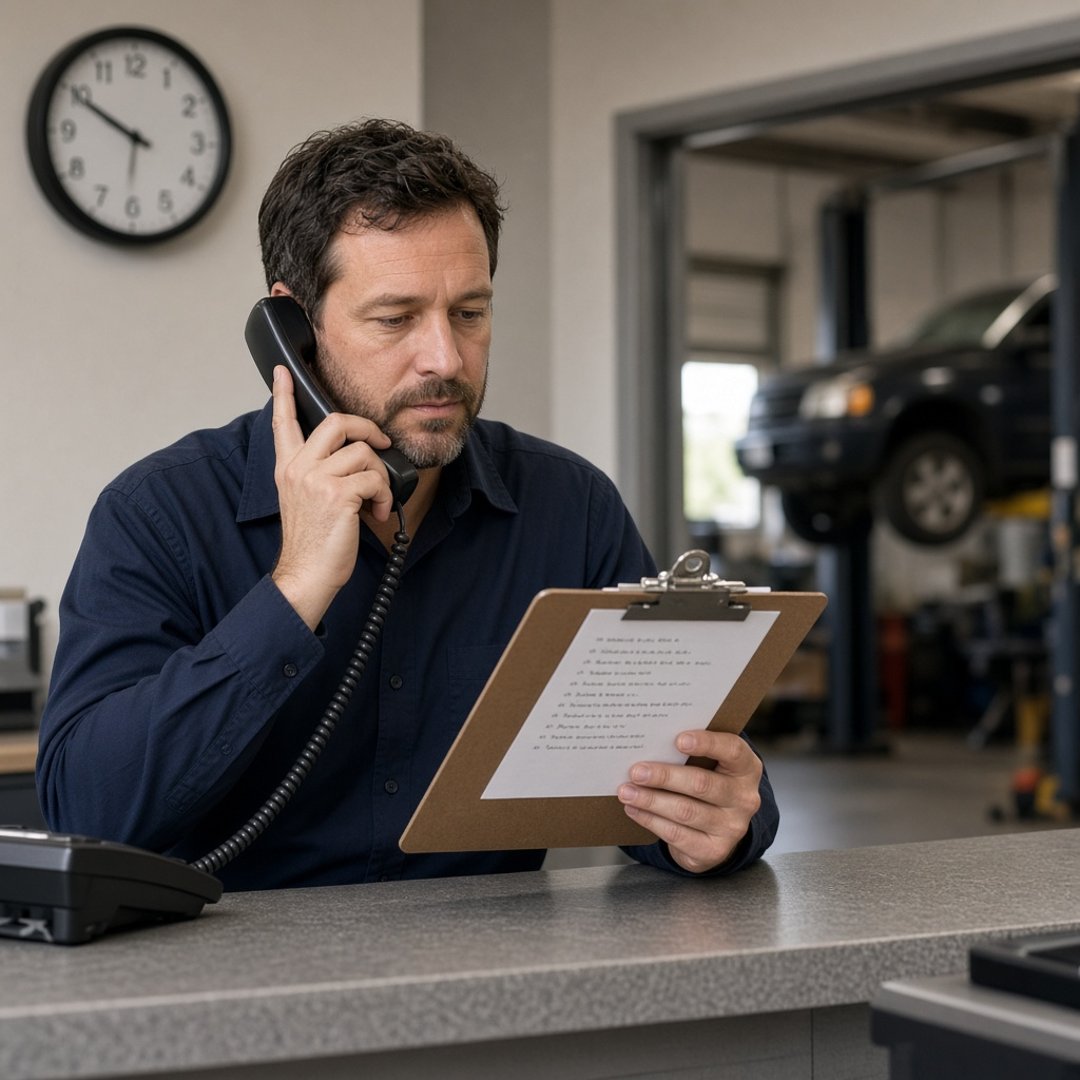
An auto repair shop should return a missed call as soon as a person is free to talk, and the same business day at the latest. Speed comes from a routine, not from hustle. Set fixed call back times during open hours, give one named person the missed call list, and return calls in a set order so the driver with a car that will not start never waits behind a routine question.
Key takeaways
- Return missed calls the same business day, and sooner when a person is free.
- Fixed call back times beat calling back whenever someone remembers.
- One named person owns the missed call list each day, with a backup.
- Call back in order, starting with stranded or unsafe cars and new callers.
- Track each call to reached, left a message, or booked.
Return a missed call the same business day, and sooner when someone is free
A missed call should be returned as soon as a person at the shop can give the driver a real conversation, and never later than the same business day. Someone calling about a noise, a warning light, or a car that will not start is usually ready to choose a shop. If you do not call back, the next shop on the search results might.
Being fast does not mean dropping everything every time the phone rings out. It means the shop has a routine that gets every missed call back in front of a person on a set schedule. The rest of this article is that routine: fixed call back times, one named owner of the list, and an order for who gets called first.
Set fixed call back times during open hours
Fixed call back times are the simplest way to make returning calls fast and predictable. Pick two to four moments in the day when the counter usually has a breather, such as right after the morning drop-offs, right after lunch, and an hour before close. At those times, the owner of the list works through every open missed call before doing anything else.
Fixed times beat calling back whenever someone remembers, because a busy counter will always find something more urgent. They also let the shop make an honest promise. If the voicemail greeting says someone will call back within the hour during open hours, the call back times have to make that true. Keep the times the same every day so the habit sticks.
Give one named person the missed call list
One named person should own the missed call list each day. That is usually the service advisor or whoever runs the front counter, since they can see the schedule and the shop management system. When the list belongs to the whole team, each person assumes someone else called back, and the driver waits.
Name a backup for lunch, appointments, and days off. Put both names somewhere the team can see. The owner of the list does not have to make every call, but they are responsible for every call being made, marked, and closed out by the end of the day.
Pull every missed call into one list
A call back routine only works if every missed call lands on one list. Missed calls show up in several places: the phone system's call log, the voicemail box, and, if the shop uses one, the replies to a missed call text back. If those live in three places, some calls will fall through.
The list can be a clipboard at the counter, a shared sheet, or a view in the phone system. What matters is that it shows the time of the call, the number, any message, and a status. If the shop is missing a lot of calls in the first place, the article on why an auto repair shop misses calls covers the common causes.
Return calls in a set order
Return missed calls in the same order every time, starting with the drivers who need help most. First, anyone who left a message about a car that will not start, is unsafe to drive, or is stuck somewhere. Next, new callers the shop has never seen, because they are the most likely to try another shop. Then existing customers asking about a car in the bay or a past job.
Calls with no message still go on the list. Work them after the ones with a clear need, and do not skip them. A call with no message is often a driver who did not want to talk to a machine, and they may still be deciding where to take the car.
Make each call back count
A fast call back only helps if it turns into a conversation that moves the car toward the bay. Open with the shop name and say you are returning their call. Ask what the car is doing and when it started. Offer two real drop-off times instead of asking when they would like to come in. Confirm the name, the number, and the vehicle before you hang up.
If the call goes to voicemail, leave a short message with the shop name and the best way to reach the counter, then try again at the next call back time. Mark each attempt on the list as reached, left a message, or booked. The guide on turning phone calls into appointments goes deeper on what to say once the driver picks up.
Handle after hours calls first thing in the morning
Calls missed after closing should be returned first thing the next open morning, before the drop-off rush. Make that the first call back time of the day. Drivers who called the night before have been waiting the longest, and many are hoping to drop the car off that morning.
Check that the voicemail greeting and any text back say when someone will call, and that the time matches the hours on the Google listing and the website. At the end of each day, look at what is still open on the list. If calls are regularly left over at closing, the call back times are too far apart or the owner of the list has too much else on their plate. Fix the routine, not just the backlog.
How to return missed calls at an auto repair shop
- Pull the missed call list from the phone system, voicemail, and text replies into one place.
- Name one person who owns that list each day, plus a backup for lunch and days off.
- Set fixed call back times during open hours, such as right after the morning drop-offs and right after lunch, and keep them every day.
- Return calls in order, starting with drivers who left a message about a car that will not run or is unsafe, then new callers, then existing customers with questions.
- Make every call back count by asking what the car is doing and offering two real drop-off times.
- Mark each call on the list as reached, left a message, or booked, and try once more before closing it.
- Return calls that came in after hours first thing the next open morning, before the counter gets busy.
Questions people ask
How fast should an auto repair shop return a missed call?
As soon as a person at the counter is free to have a real conversation, and the same business day at the latest. A driver with a car problem is often calling more than one shop, so the shop that calls back first has a better chance of getting the car. The practical way to be fast is a routine. Set fixed call back times, give one person the missed call list, and work it in the same order every time.
Who should return missed calls at a repair shop?
One named person each day, usually a service advisor or whoever runs the front counter. When the list belongs to everyone, it tends to belong to no one, and calls sit. Name a backup for lunch, appointments, and days off so the list never goes unworked. The owner can review the list at the end of the day, but the daily work should sit with the counter, where the schedule and the shop management system live.
Which missed calls should a shop return first?
Start with drivers who left a message about a car that will not start, is unsafe to drive, or is stuck somewhere. Then call new callers you have never seen before, because they are the most likely to try another shop. After that, return existing customers with questions about a car already in the bay or a past job. Calls with no message still go on the list. Work them after the ones with a clear need.
What if the shop misses a call after hours?
Return it first thing the next open morning, before the drop-off rush fills the counter. Make sure the voicemail greeting says when someone will call back, and keep that promise. If the shop uses a missed call text back, the text can tell the driver the call was seen and when to expect a reply. Do not promise a call back time the shop cannot keep, because the driver will hold you to it.
How many times should a shop try to reach a missed caller?
Try at least twice, at different times of the day, before closing the call out. If the first try goes to voicemail, leave a short message with the shop name and a clear way to reach the counter, then try again at the next call back time. A text after the second try can help if the number takes texts and the shop follows the texting rules. Mark each attempt on the list so nobody calls the same driver three times in an hour.
Should a shop text instead of calling back?
A text can start the conversation, but most repair jobs still need a person on the phone. Use a text to let the driver know the shop saw the call and to ask what the car is doing. Then call back at the next set time, or keep texting with a real person until there is a drop-off time. A text that never gets a human follow-up can leave the driver more annoyed than no text at all.
How do I know if the shop is returning calls fast enough?
Look at the missed call list at the end of each day. Count how many calls were missed, how many were returned, how many drivers were reached, and how many ended in a drop-off. If calls are still open at closing, the call back times are too far apart or the owner of the list is too busy. Call tracking can line these up by week. We do not guarantee a call count, a ranking, or a revenue number.

Isaac Donnelson
Isaac Donnelson runs Auto Shop Marketers for auto repair shops. He is the growth partner on the account. He writes about calls, the Google listing, and what a shop actually pays for ads.