
Home / Blog / Should an auto repair shop text back missed calls?
Calls
Should an auto repair shop text back missed calls?
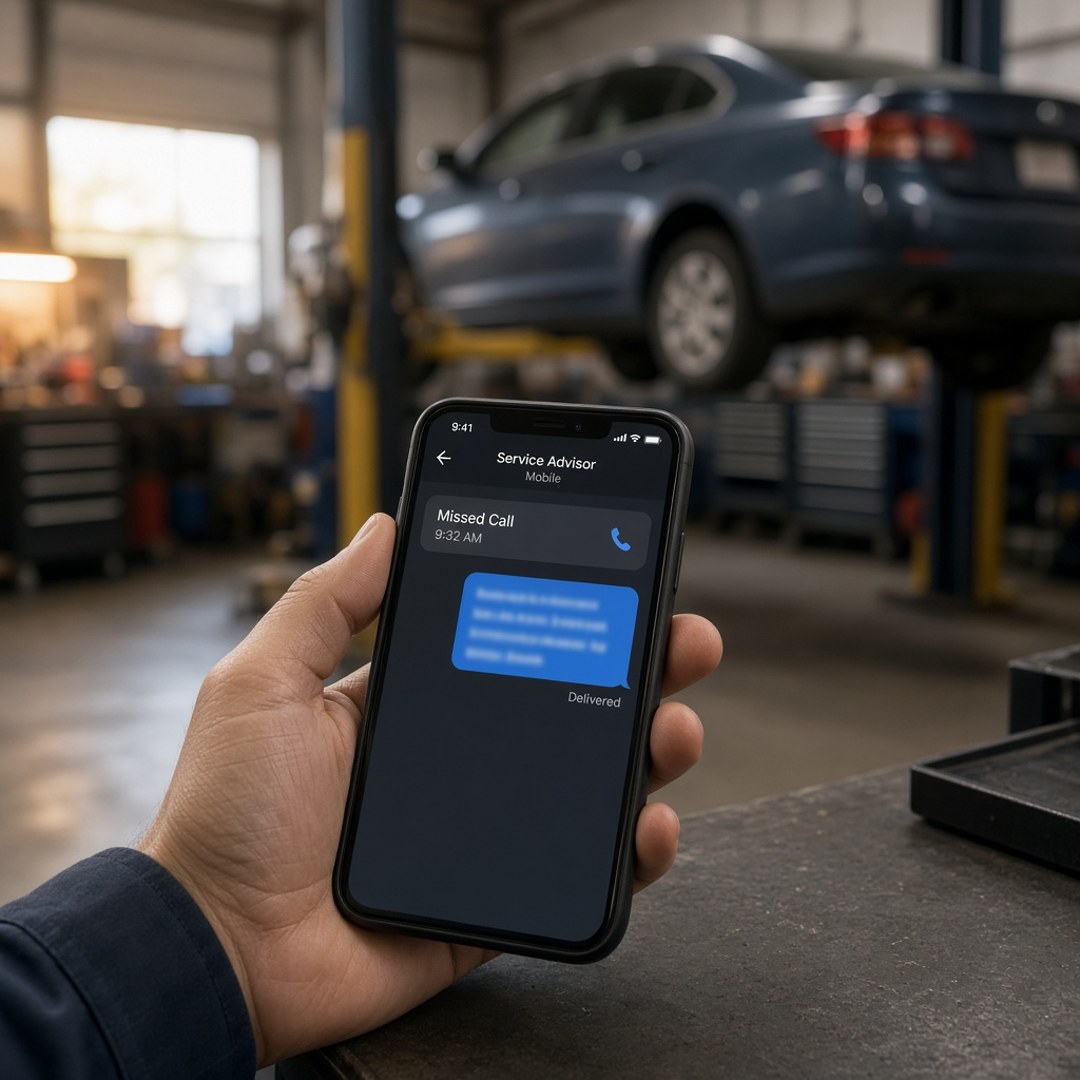
Yes, most auto repair shops should text back missed calls, as long as the text is a bridge to a real conversation and not a replacement for one. A short reply in the shop's name tells the driver the call was seen and someone will follow up. It only works if the number is set up for business texting, the message follows the consent and opt-out rules, and a person calls or texts back quickly.
Key takeaways
- A text back tells the driver the call landed, which a ringing phone does not.
- Keep the first text short, in the shop's name, with one clear next step.
- The shop's number must be registered for business texting before it sends.
- Every text back still needs a person to follow up the same day.
- Compare it with voicemail and an answering service by what each one catches.
A text back is worth it when someone follows up
A missed call text back is worth it for most shops, because it reaches the driver while they are still deciding where to take the car. A driver who calls and hears ringing has no idea whether anyone will call back. A text in the shop's name, sent within a minute or so, tells them the call was seen. That small signal can be the reason they wait instead of dialing the next shop.
The text is not the fix on its own. It holds the driver for a short window, and a person at the shop has to use that window. If the article on why an auto repair shop misses calls describes your counter, a text back can cover the gaps while you work on the causes.
How a text back compares with voicemail and an answering service
Voicemail, an answering service, and a text back each catch a different part of the missed call problem. Voicemail depends on the driver choosing to leave a message, and many callers will not. An answering service puts a live voice on the line, which helps most when the shop misses calls at predictable hours. A text back reaches every missed caller with a cell phone, at any hour, without them doing anything.
Many shops end up using two of the three. A short voicemail greeting still matters for callers who want to talk. An answering service can cover the morning rush or after hours. The text back sits underneath both as a simple safety net for the calls that slip through anyway.
What the first text should say
The first text should be short, sound like the shop, and ask for one thing. Use the shop's name, say the call was missed, and give one next step. For example: this is the shop, sorry we missed your call, what is the car doing, and a service advisor will call you back shortly. Add a plain opt-out line such as reply STOP to opt out.
Leave out prices, diagnoses, and promised finish times. The driver will read whatever the text says as a promise from the shop. If the shop is closed when the text goes out, say when someone will reply, and keep that time the same as the hours on the Google listing and the website.
The rules a shop has to follow before it texts
Business texting in the United States has rules, and the shop should know them before turning a text back on. The Telephone Consumer Protection Act, often called the TCPA, covers automated calls and texts to consumers. Separately, the mobile carriers require businesses that send texts from a regular ten-digit local number to register through A2P 10DLC, usually through the phone or texting provider. Texts from an unregistered number can be filtered or blocked.
A reply to someone who just called the shop is not the same as a marketing blast, but it is still an automated text. Honor every STOP reply right away, and do not add missed callers to a promotional list without their permission. Ask your provider how they handle registration and opt-outs. If anything about your setup is unclear, check with an attorney rather than guessing.
What has to be true for it to work
A text back works when the shop's main number can send texts, the replies land with a named person, and that person answers during open hours. Some phone systems can text from the shop's existing number. Others need a separate texting service connected to the line. Either way, test it by calling the shop from your own cell phone, letting it ring out, and reading the text as a driver would.
Then decide who owns the replies. A driver who answers the text with the car and the problem is close to booking, and that reply should not sit in an inbox for hours. The same habits that turn a counter call into a booked drop-off apply here: start with the car and the symptom, offer two real times, and confirm the name and number. The guide on turning phone calls into appointments covers those steps.
When a text back is not the right fix
A text back is the wrong fix when it becomes the reason nobody answers the phone. If the counter starts letting calls ring because the text will catch them, the shop has traded a conversation for a slower one. The text should catch the calls the shop could not answer, not the calls it chose not to.
It also does little for callers on landlines, who cannot receive the text, and for drivers who want an answer right now about a car that will not start. Those callers still need a person or a call back soon. Watch the weekly numbers: missed calls, texts sent, replies, and booked drop-offs. If call tracking is in place, those texts should show up next to the answered calls in the same report.
Questions people ask
Should an auto repair shop text back missed calls?
For most shops, yes. A driver who calls a shop and gets no answer usually calls the next shop on the list. A short text that arrives right after the missed call tells that driver the shop saw the call and will follow up, which gives the shop a chance to keep the job. The text is a holding step. It works when a person at the shop follows up soon, and it does little when nobody does.
What should a missed call text say?
Keep it to two or three short sentences. Use the shop's name, say sorry the call was missed, and give one next step, such as asking what the car is doing or saying a service advisor will call back shortly. Add a plain opt-out line, such as reply STOP to opt out. Leave out prices, diagnoses, and promises about when the car will be done. The goal is to start a conversation a person can finish.
Is a missed call text back legal?
Texting customers is regulated in the United States. The Telephone Consumer Protection Act covers automated texts, and the mobile carriers require businesses that text from a regular ten-digit number to register through A2P 10DLC. A reply to someone who just called the shop is a different situation from a marketing blast, but the rules still apply. Ask your phone or texting provider how they handle registration and opt-outs, and check with an attorney if you are unsure.
What is 10DLC registration and does a shop need it?
10DLC stands for ten-digit long code, the kind of regular local phone number most shops already use. The carriers ask businesses that send texts from those numbers to register the business and describe how they use texting, usually through their phone or texting provider. Texts from an unregistered number can be filtered or blocked before they reach the driver. If the shop plans to text back missed calls, registration is part of the setup.
Is a text back better than voicemail?
They do different jobs, and many shops use both. Voicemail asks the driver to do the work: wait for the beep, leave a message, then wait again. Plenty of callers hang up instead. A text back reaches the driver without them doing anything, and they can answer when they have a free moment. A short voicemail greeting still matters for callers who do want to leave a message.
Can a text back replace calling the driver?
No. The text buys a little time, but most repair conversations still need a person: what the car is doing, when it can come in, and what happens at drop-off. Use the text to learn the car and the problem, then call or keep texting with a real person until there is a drop-off time. A text back that never gets a human follow-up can feel worse to the driver than no text at all.
How do I know if missed call texting is working?
Track it like any other call source. Each week, count the missed calls, how many got a text, how many drivers replied, and how many of those turned into a booked drop-off. If the shop uses call tracking, line those numbers up with the calls the counter answered. We do not guarantee a call count, a ranking, or a revenue number. The point is to keep more of the drivers who already called.

Isaac Donnelson
Isaac Donnelson runs Auto Shop Marketers for auto repair shops. He is the growth partner on the account. He writes about calls, the Google listing, and what a shop actually pays for ads.