
Home / Blog / What should an auto repair shop voicemail greeting say?
Calls
What should an auto repair shop voicemail greeting say?
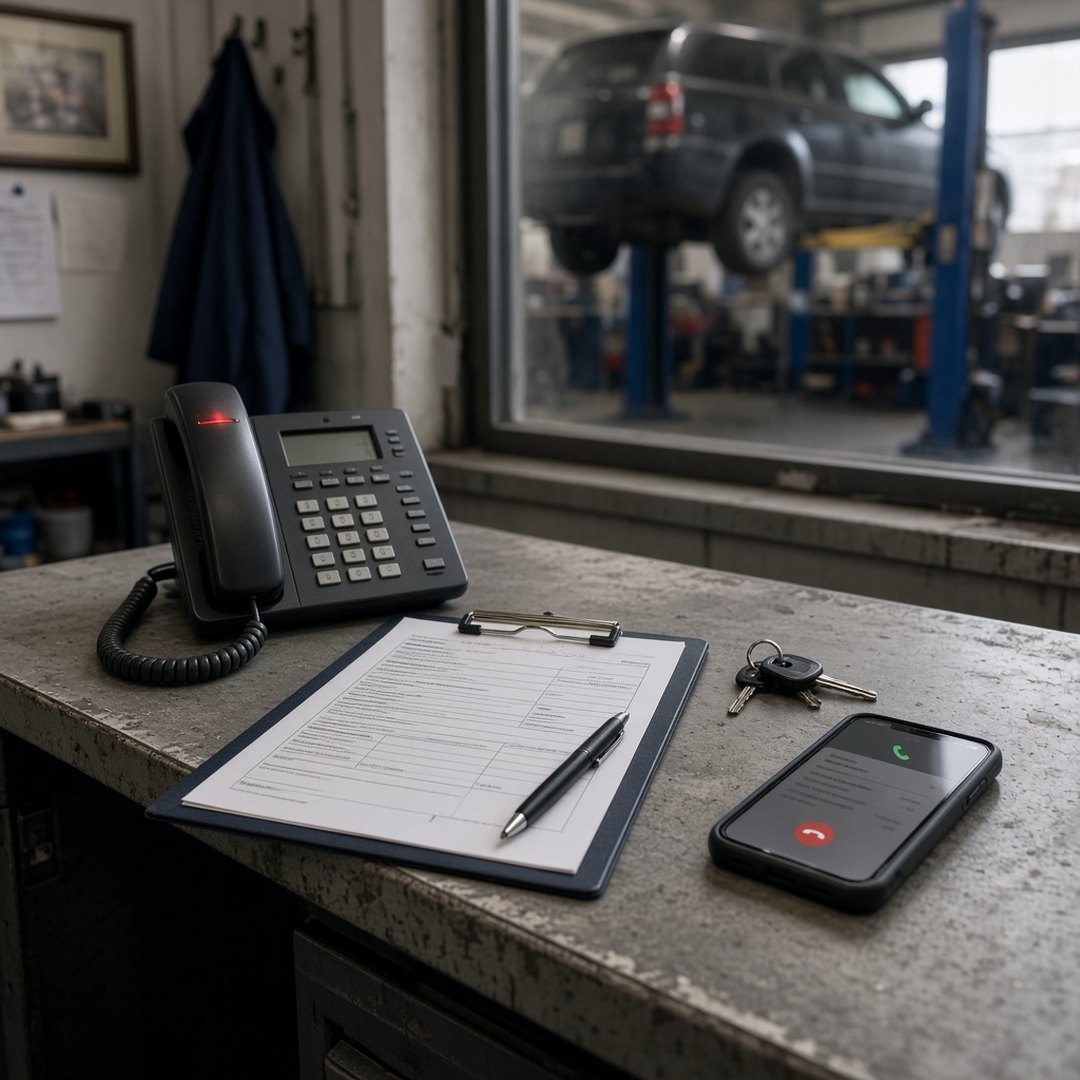
An auto repair shop voicemail greeting should say the shop name so the caller knows they reached the right place, give hours that match the Google listing, ask for a name, a call back number, the car, and what it is doing, and say when someone will call back. Keep it short and plain. Then keep that promise, because the greeting only works if the call back happens.
Key takeaways
- The greeting confirms the caller reached the right shop, by name.
- Hours in the greeting must match the hours on the Google listing and the website.
- Ask for the name, the number, the car, and what it is doing. Nothing more.
- Promise a call back time the counter can actually keep.
- A greeting does not replace answering the phone during posted hours.
A voicemail greeting is the shop's promise to call back
An auto repair shop voicemail greeting is the short recording that tells a caller they reached the right shop, when the shop is open, what to leave, and when a person will call them back. That is the whole definition. It is not an ad, a menu of services, or a place to read the shop's history.
The greeting matters because a driver with a problem car is usually calling more than one shop. If the recording sounds unclear, long, or like nobody checks the box, the caller hangs up and dials the next number. A short, plain greeting and a call back that actually happens keep that driver with you.
Say the shop name first
The first words should be the shop name, said the way it reads on the sign. The caller wants to know they dialed the right place before anything else. A generic carrier greeting that reads back the phone number makes callers wonder if they have the wrong shop.
Say it clearly and at a normal pace. If more than one person records greetings at the shop, pick one voice and keep it. A greeting recorded in the bay with an impact gun in the background tells the caller the shop is busy, but it also makes the name hard to hear. Record it in the office with the door shut.
Give hours that match the Google listing
The hours in the greeting should be the same hours the Google listing and the website show. If the listing says the shop is open and the greeting says it is closed, the caller trusts neither one. Mismatched hours are also one of the quiet reasons a shop loses calls it already paid for.
Check all three places on the same day and change them together when the hours change. Holiday hours get the same treatment. The guide on what to put on an auto repair shop Google Business Profile covers the hours field and the other facts that need to match.
Ask for only what the counter needs
The greeting should ask for a name, a call back number, the car, and what it is doing. Year, make, and model plus a sentence about the problem is enough for the counter to call back ready to talk about the job. Asking for more, like a VIN or an insurance claim number, makes callers hang up.
Here is a plain example. Swap in your own details:
"You've reached [Shop Name]. We're open [days and hours]. We're with a customer or under a car right now. Please leave your name, your number, your car's year, make, and model, and what it's doing, and we'll call you back [your call back promise]. If you're calling after hours, we'll call you when we open. Thanks for calling [Shop Name]."
An after-hours version can be even shorter:
"You've reached [Shop Name]. We're closed right now and open again [next open day and time]. Leave your name, number, and what your car is doing, and we'll call you back when we open."
Promise a call back time the shop can keep
The call back line is the most important sentence in the greeting. It tells the caller whether it is worth waiting for you or calling someone else. "We return every message the same business day" works only if someone owns the voicemail box and clears it on a schedule.
Pick a person and a time. The first hour after opening and right after lunch are common times to clear the box, but the right times are the ones your counter will actually keep. When you call back, have the message notes in front of you so you can get to the car, the problem, and a time quickly. The article on turning phone calls into appointments walks through that call.
Keep the greeting short and leave the pitch out
A good greeting is short, plain, and free of selling. Leave out slogans, brand lists, specials, and long directions. Each one adds time before the beep, and a caller who is standing next to a car with a warning light is not listening for a coupon.
Do not put prices, specials, or wait times in the greeting either. Those change, and a recording that says one thing while the counter says another creates a bad first conversation. If a fact is not true every day, it does not belong on the recording.
A greeting does not fix missed calls during open hours
Voicemail is for overflow and after hours, not for the middle of a posted day. If the phone goes to voicemail while the shop says it is open, the greeting is covering a staffing gap, and many of those callers will not leave a message at all.
Look at when the misses happen before you rewrite the recording. The article on why a shop misses calls shows the usual times, and if the same hours keep going to voicemail, an answering service for overflow may be worth comparing. Fix the answering first. Then let a short greeting and a reliable call back handle the rest. We do not guarantee a call count, a ranking, or a revenue number.
Questions people ask
What should an auto repair shop voicemail greeting say?
It should say four things. The shop name, so the caller knows they reached the right place. The hours, matching what the Google listing and the website say. What to leave, which is a name, a call back number, the year, make, and model, and what the car is doing. And when someone will call back. That is the whole job. A greeting that tries to sell services, list every specialty, or read a long menu loses callers before the beep.
How long should a shop voicemail greeting be?
Short enough that the caller is still listening when the beep comes. Read it out loud and time it. If you run out of breath or start listing services, cut it. Most of the length in a bad greeting comes from things the caller did not ask for, like a slogan, a website address, or a list of brands. The name, the hours, what to leave, and the call back promise fit in a few sentences, and the caller can start talking sooner.
Should the greeting say when the shop will call back?
Yes, and it should be a promise the counter can keep. "We return every message the same business day" or "We call back first thing when we open" tells the caller what to expect, so they are less likely to dial the next shop. Do not promise a time nobody owns. If messages sit until the afternoon, say so, or fix the routine first. A missed call back after a promise feels worse to the caller than no promise at all.
Should the greeting send callers to the website or a text line?
Only if someone answers there. If the shop has an online booking page or a text line that a person checks, one short line pointing to it is fine, said once and spelled simply. If the website only has a contact form nobody reads, leave it out. Every extra option in a greeting is one more thing the caller has to remember, and a caller with a warning light on the dash mostly wants to know a person will call them.
Should a shop have a different greeting after hours?
A separate after-hours greeting helps when the shop is closed, because the caller hears that the shop is closed and when it opens again. During posted hours, the phone should ring to a person, not voicemail. If calls go to voicemail in the middle of a posted day, the greeting is not the problem. The answering is. Look at when the misses happen and cover those hours first, whether that means a second person at the counter or overflow help.
Does the voicemail greeting matter for Google Ads calls?
It matters because an ad call that reaches voicemail during ad hours is money spent on a caller who may not wait. Run the ads during the hours a person can answer, and let the greeting catch the overflow and the after-hours calls. Then return those messages quickly. Call tracking can show which voicemails came from the ads, so the counter can call those back first. We do not guarantee a call count, a ranking, or a revenue number.

Isaac Donnelson
Isaac Donnelson runs Auto Shop Marketers for auto repair shops. He is the growth partner on the account. He writes about calls, the Google listing, and what a shop actually pays for ads.