
Home / Blog / Who should answer the phone at an auto repair shop?
Calls
Who should answer the phone at an auto repair shop?
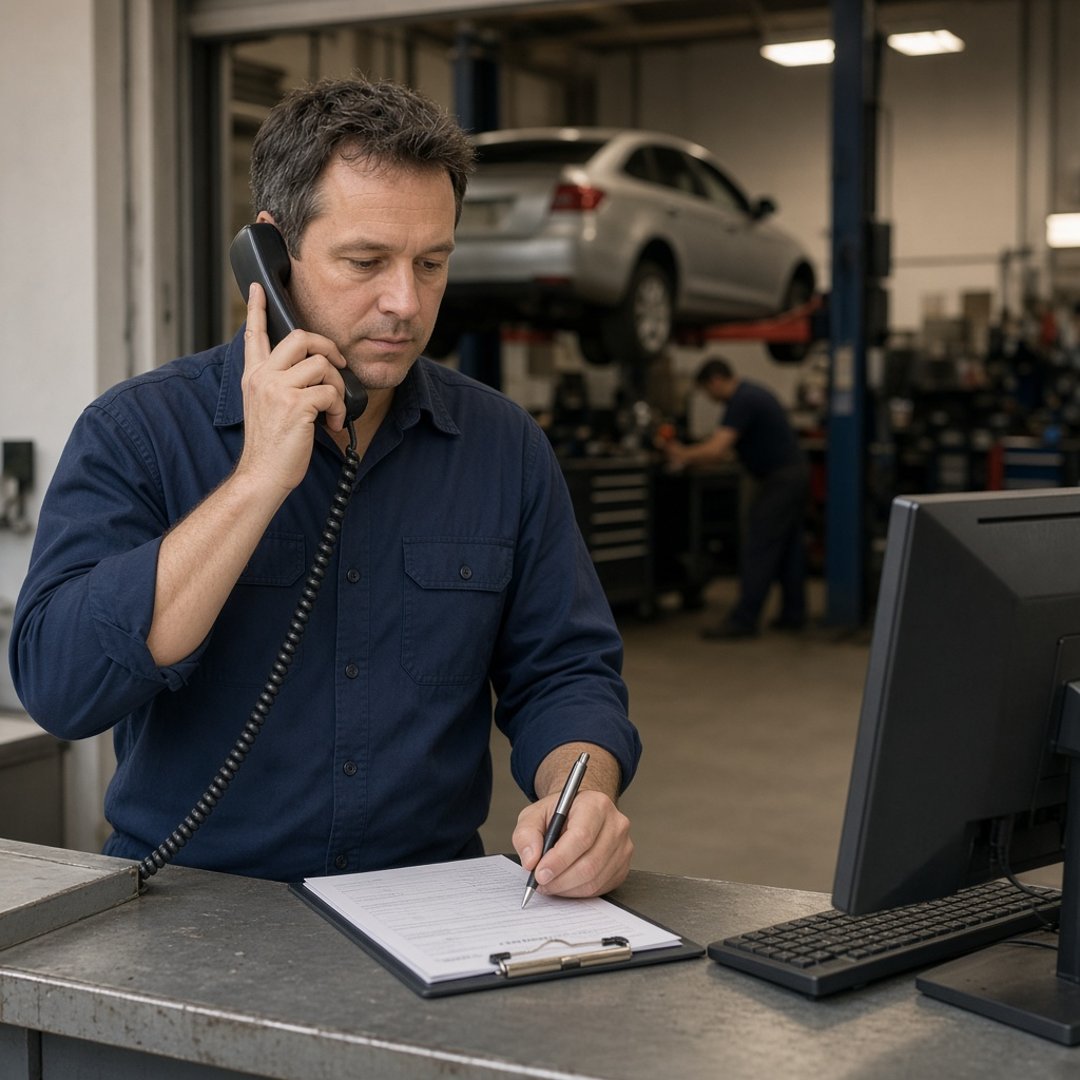
The phone at an auto repair shop should be answered by one named person who can see the schedule and book a time on the call, usually the service advisor or the owner. That person owns the line for every open hour. A second named person covers the rush, lunch, and days off. Technicians in the bay should not be the backup, because they cannot book and the car on the lift stops.
Key takeaways
- Give the phone one owner, by name, for every posted hour.
- The owner must be able to see the schedule and book on the call.
- Name one backup for the rush, lunch, and days off.
- Do not use techs in the bay as the backup.
- Check the posted hours against who is actually at the counter.
One named person owns the phone
The phone at an auto repair shop should belong to one named person during every posted hour, and that person should be able to book a time on the call. In most independent shops that is the service advisor. In a small shop it is often the owner.
Naming the person matters more than the job title. "The front" or "whoever is free" is not an owner. When the phone belongs to everyone, each person waits for someone else to grab it, and the call rolls to voicemail while three people are in the building.
The person who answers must be able to book
The right person is whoever can see the schedule and offer a real drop off time while the caller is still listening. That is the whole job of the call. A caller with a warning light wants to know two things: can you look at it, and when.
So the person who answers needs the schedule open, the approved price ranges for routine work written down, and a clear sense of which jobs the shop does not take. The guide on turning phone calls into appointments covers what to say once the phone is picked up. This post is about making sure the right person picks it up.
Name a backup for the rush
Every shop needs a second named person for the moments the phone owner cannot answer. Those moments are predictable: the first morning hour when cars are dropped off, lunch, late afternoon pickups, and days off.
Write the backup down. In a two person front, the backup is the other advisor. In a one person front, it is usually the owner, at least during the busy windows. The point is that nobody has to decide in the moment, with the phone ringing, whose turn it is.
Techs in the bay are not the backup
Technicians should not be the regular backup for the phone. A tech who walks off a car to answer usually cannot see the schedule, cannot quote the first step, and ends the call with "someone will call you back." The caller hears a shop that is too busy to help, and the car on the lift stops earning while the tech is at the counter.
A tech picking up in a real emergency is fine. A shop where techs routinely answer is a shop that never assigned the phone to anyone. Fix the assignment instead of asking the bay to cover it.
When nobody can answer, plan the fallback
Some calls will still go unanswered, so decide what happens to them before they happen. A short voicemail greeting that tells the caller when to expect a call back, and a person who returns missed calls quickly, cover most gaps.
Some shops send overflow to an answering service. That can work if the service takes a clean message and the shop calls back fast, but it is a fallback, not the owner of the phone. The post on whether to use an answering service goes through that choice.
Check coverage against the posted hours
The simplest check is to compare the hours on the sign and the Google listing with the hours someone is actually at the counter. If the shop opens at 7:30 but the advisor arrives at 8:00, the first half hour of calls has no owner.
If the phone system or call tracking shows missed calls by hour, the gaps usually point straight at the problem. The post on why a shop misses calls covers the other causes. Close the gap by moving a person or moving the posted hours, not by hoping someone grabs it. We do not guarantee a call count, a ranking, or a revenue number.
Questions people ask
Who should answer the phone at an auto repair shop?
One named person who can see the schedule and book a time while the caller is still on the line. In most independent shops that is the service advisor, and in a very small shop it is often the owner. That person owns the phone for every posted hour. A second named person covers when the owner of the line is busy, at lunch, or out. Everyone else knows who picks up and who does not.
Should technicians answer the phone?
Not as a habit. A tech who walks out of the bay to grab the phone usually cannot see the schedule or quote the first step, so the call ends with a promise that someone will call back. Meanwhile the car on the lift sits and the hourly work stops. A tech can be the very last resort in a true emergency, but a shop that relies on techs to answer is really a shop with no one assigned to the phone.
What if the shop only has one person at the counter?
Then decide ahead of time what happens when that person is already on a call or with a customer at the counter. The usual answer is that the owner is the backup during the busy windows, often the first morning hour and late afternoon pickups. If no person can cover, a short, clear voicemail and a fast callback are better than a tech guessing. Some shops use an answering service for overflow, but it should take a message, not pretend to book.
Why does one owner of the phone matter so much?
When everyone is responsible for the phone, nobody is. Each person assumes someone else will grab it, and the call rolls to voicemail during posted hours. A named owner removes that guess. It also keeps answers consistent, because the same person gives the same first step and the same price ranges every time, which callers notice when they are comparing shops.
What should the person who answers be able to do?
Book a time, explain the first step and what it costs, and note the car and the problem. That means the schedule is open in front of them, the approved price ranges are written down nearby, and they know which jobs the shop does not take. If they have to put the caller on hold to find someone else for any of those, the call is at risk.
How can a shop tell if the phone is covered?
Look at missed calls by hour, if the phone system or call tracking shows them. Gaps usually line up with lunch, the morning drop off rush, and the last hour of the day. Then compare those hours with who was actually at the counter. If the posted hours and the covered hours do not match, change the coverage plan or the posted hours. We do not guarantee a call count, a ranking, or a revenue number.

Isaac Donnelson
Isaac Donnelson runs Auto Shop Marketers for auto repair shops. He is the growth partner on the account. He writes about calls, the Google listing, and what a shop actually pays for ads.